
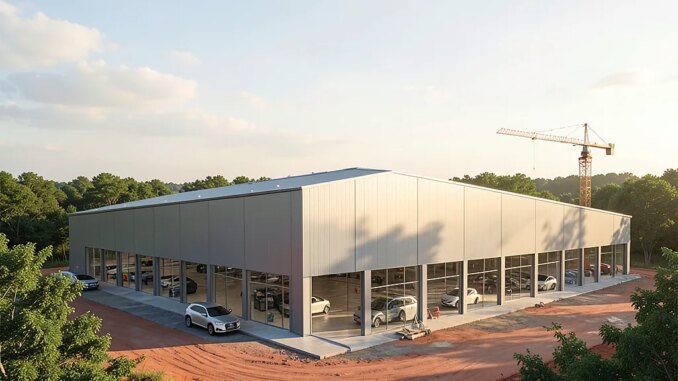
Audi plans to invest $4 billion in its first assembly plant in the United States, near Macon, Georgia. The proposed factory is designed to produce up to 200,000 SUVs a year and create about 4,500 jobs. Audi expects construction to begin in 2027, with production starting in the early 2030s.
The Volkswagen Group’s premium brand intends to build some of its largest, high-end SUV models at the facility. The investment would expand Audi’s US manufacturing footprint and give the company a local production base in one of its key markets.
Where Will Audi Build Its US Factory?
Audi plans to locate the plant near Macon, Georgia. The investment was announced by US President Donald Trump at a rally in Perry, Georgia, on October 24. The company says construction is scheduled to start in 2027, while vehicle production is expected to begin in the early 2030s.
How Many Vehicles and Jobs Will the Plant Create?
The factory is planned to have annual capacity for 200,000 SUVs. Audi also expects the project to support approximately 4,500 jobs. The company has not identified the specific models that will be built there, but says production will focus on its largest and more premium SUVs.
Why Is Audi Investing in US Production?
Local manufacturing would help Audi serve American customers from within the United States rather than relying entirely on vehicles imported from Europe or Mexico. Audi CEO Gernot Doellner described the move as a long-term commitment to the US market, saying the company made the investment because it believes in the market’s future.
The plan also comes as tariffs on imported vehicles, steel, aluminum and automotive parts have raised costs for automakers. Audi said tariffs cost it €1.2 billion, or about $1.4 billion, last year. Because the Georgia plant is not expected to begin production until the early 2030s, it is unlikely to eliminate those added costs in the short term.
What the Georgia Investment Means for Audi
Once operational, the plant could give Audi more flexibility to build SUVs closer to the customers who buy them. It would also reduce the brand’s dependence on imports for at least some US sales. The scale of the proposed facility—$4 billion in investment and capacity for 200,000 vehicles annually—signals a major expansion, though the production start remains several years away.
How the Factory Announcement Fits Into the Tariff Debate
The announcement came ahead of the November 3 midterm elections, when Georgia voters were also set to choose a senator and governor. Trump presented Audi’s investment as evidence that tariffs can encourage companies to move production to the United States. Critics of the tariffs argue that they increase vehicle prices and create uncertainty that can lead companies to delay investment decisions.
Audi’s project is therefore being viewed both as a manufacturing expansion and as part of a wider dispute over US trade policy. The company’s stated construction and production timetable means the plant’s practical effect will depend on whether the plans proceed as scheduled.





Be the first to comment