
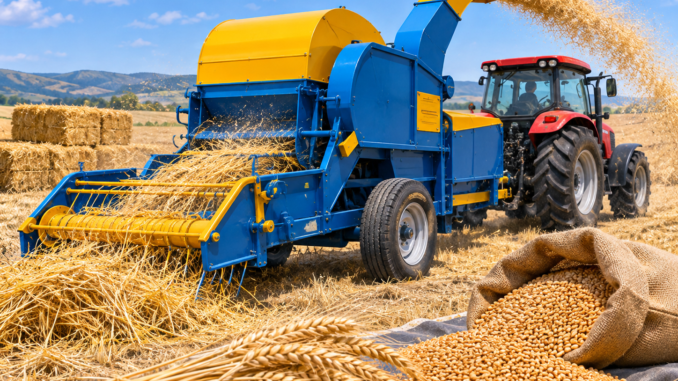
A good harvest can still lose value at the threshing stage. Grain left in the straw, broken kernels and slow output all cut into a farm’s margin. That is why choosing the right threshing machine matters as much as choosing the right seed. This guide covers the points farmers and dealers should check before they buy.
Start with the crops you grow
The first question is simple: what will the machine thresh? A thresher machine built only for wheat and barley uses a different drum speed and sieve set than one set up for chickpeas, lentils or beans. If your farm grows more than one crop, look for a multi-crop threshing machine with changeable sieves and adjustable drum speed. One unit can then cover cereals and pulses across the season.
Match the machine to your tractor
Most threshing machine models run from the tractor’s power take-off (PTO). If the tractor cannot deliver the horsepower the machine needs, the drum loses speed. Grain stays in the straw or gets cracked. Ask the manufacturer for the recommended horsepower range and compare it with your tractor before you order. A thresher machine that is correctly matched also burns less fuel and puts less strain on belts and bearings.
Stationary or pick-up type?
A thresher machine comes in two main designs:
- Stationary (hopper-fed) models: Crop is fed into the machine by hand or with a loader. They cost less and suit small to mid-sized farms.
- Pick-up models: The machine moves along the field, lifts the cut crop from the ground and threshes it in one pass. They need fewer workers.
Where labour is scarce or expensive, a pick-up threshing machine usually pays for itself faster, even with a higher purchase price.
Capacity and grain cleanliness
Choose hourly capacity based on the area you harvest each season. An undersized thresher machine stretches the harvest over extra days; an oversized one wastes fuel. Grain cleanliness matters just as much. A well-designed threshing machine separates grain from chaff and dust so the crop goes to storage or to the buyer clean, without a price deduction.
Single or double elevator
The elevator carries threshed material through the cleaning stage. In a threshing machine, double-elevator designs clean more thoroughly and are less likely to clog at high throughput. Single-elevator models are simpler and cheaper, and they work well for mid-sized operations.
Straw output
On mixed farms, the straw that comes out of the thresher machine is feed for livestock. Some models chop it finer so it can go straight to the barn. Ask how the thresher machine handles straw; it may save you from buying a separate straw chopper.
Service and spare parts
A breakdown in the middle of harvest can cost a farm several days of work. Before you buy a thresher machine, check spare parts stock, delivery times and whether the manufacturer offers technical support in your region. Buying a threshing machine from an experienced producer shortens the wait for parts when it counts.
Quick checklist
- List every crop the machine will handle.
- Compare your tractor’s horsepower with the recommended range.
- Decide between stationary and pick-up types based on labour and field size.
- Size hourly capacity to your harvest area.
- Confirm spare parts and service support.
A farmer who works through these five steps will end up with a thresher machine that fits the farm rather than one that only fits the budget. The right threshing machine finishes the harvest faster, keeps grain clean and stays productive for many seasons. When in doubt, ask the manufacturer to recommend a thresher machine for your exact crop mix and tractor.







Be the first to comment