
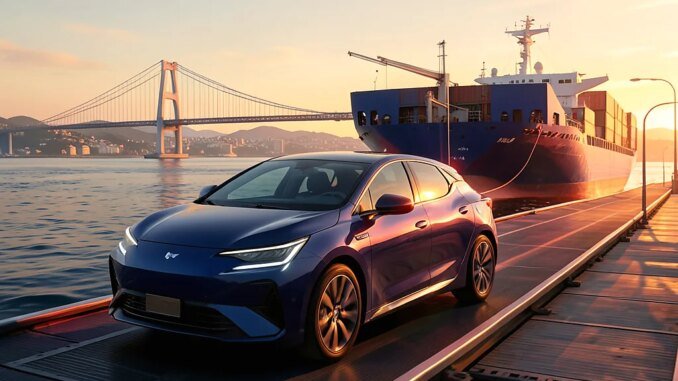
Türkiye aims to increase automotive exports to $45.5 billion in 2027, up from an expected $41.6 billion in 2026. The target forms part of a wider plan to expand production, strengthen domestic automotive technology, and prepare infrastructure for electric vehicles.
The 2027 Annual Presidential Program also projects that automotive exports will account for 16.5% of manufacturing exports. Alongside export growth, the program sets goals for limiting imports, raising the production index, and developing electric, hydrogen-powered, and autonomous vehicle technologies.
What are Turkey’s automotive targets for 2027?
Türkiye’s main automotive targets for 2027 are $45.5 billion in exports, imports of no more than $39.5 billion, and an automotive production index of 131. The program expects exports to reach $41.6 billion by the end of 2026 and imports to stand at $37.7 billion.
The production index is forecast to rise from 129 at the end of 2026 to 131 in 2027. These goals reflect an effort to expand output while reducing reliance on imported vehicles and automotive components.
How will Turkey expand electric-vehicle charging?
Turkey plans to prepare a charging-infrastructure roadmap covering all vehicle categories. The roadmap will guide investment and support the expansion of charging networks across the country.
The program also proposes state support for companies investing in charging stations. Authorities plan to test both alternating-current (AC) and direct-current (DC) chargers, then use the results to develop inspection criteria suited to Turkey’s charging infrastructure.
These measures address two practical needs: increasing the availability of charging points and establishing consistent standards for assessing station performance.
Which automotive technologies will receive development support?
Research and development plans cover hydrogen engines, battery systems, fuel cells, electric motors, electronic control units, automotive software, and autonomous driving. The program aims to build domestic expertise in these areas and reduce dependence on imported technologies.
Work is set to continue on a hydrogen-based, carbon-neutral internal-combustion engine project. Hydrogen trains and fuel-cell technologies are also included in the development agenda.
For autonomous driving, the stated priorities include improving system reliability and reducing response times. Faster transfer of data from cameras and lidar sensors is one area identified for further technical development.
How will Turkey support local automotive production?
Türkiye plans to support domestic production of key technologies, including batteries, electric motors, electronic control units, and automotive software. Building local capabilities in these fields could help suppliers serve manufacturers at home and strengthen the sector’s position in international markets.
Research and development will also continue through the European Union-supported SAFELOOP and STREAMS projects. Authorities plan to monitor projects included in the Mobility Vehicles and Technologies Roadmap and update them where needed.
The program also calls for updating training to prepare skilled workers for the automotive sector’s changing technology needs. This links industrial investment with the technical expertise required to develop and manufacture newer vehicle systems.
What do the 2027 goals mean for the automotive sector?
The targets combine export growth with efforts to increase production, manage imports, and develop domestic technology. At the same time, planned investment in charging infrastructure and research into electric, hydrogen, and autonomous systems points to a broader shift in the sector’s priorities.
Progress will depend on turning these plans into production capacity, charging facilities, research outcomes, and trained workers. The program’s measurable benchmarks—exports of $45.5 billion, imports capped at $39.5 billion, and a production index of 131—provide indicators for tracking that progress.







Be the first to comment